In August we looked at the influential work of six female artists from 19th and 20th century.
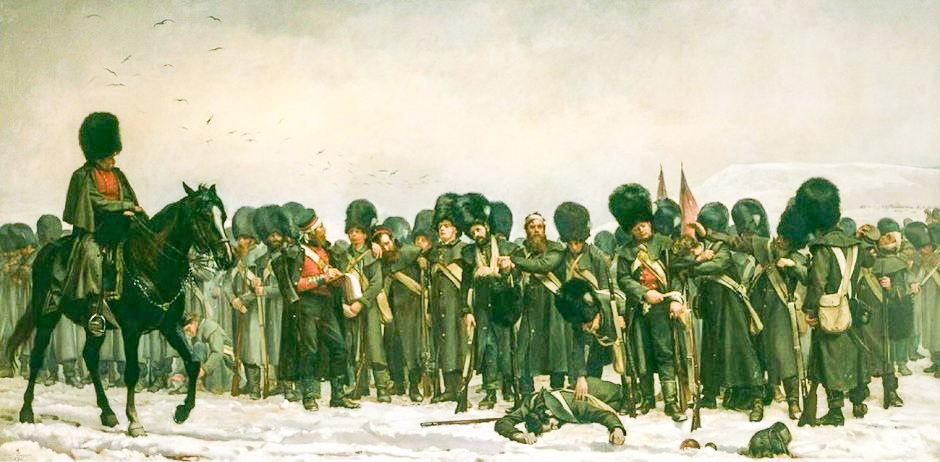
We discovered that Elizabeth Thompson (Lady Butler) was a British painter who specialised in battle scenes, an unusual subject for a female at the time.
Her painting ‘The Roll Call’ which showed a line of soldiers worn out with conflict was exhibited at the Royal Academy in 1874 and was so popular that a policeman had to stand by to regulate the crowds!
The painting was bought by Queen Victoria for the Royal Collection. https://www.rct.uk/collection/405915/the-roll-call
Berthe Morisot was a French painter, printmaker and a member of the group known as the Impressionists. Berthe and her sister studied art with a private tutor but were not allowed any formal training. Morisot managed to combine her artistic life with being a wife and mother. Most of her paintings are domestic scenes of friends and family, reflecting women’s lives in the late 19th century.
Failing eyesight meant that Gertrude Jekyll was unable to continue her studies as a painter but turned instead to garden design. She used the garden as a canvas and the flowers like paints. Her free-flowing designs were in complete contrast to the Victorian formality set out in public parks and her legacy lives on. Her home and garden, Munstead Wood in Surrey, was bought by the National Trust in 2023 but is not yet open to the public. There is some information on the NT website. https://www.nationaltrust.org.uk/visit/surrey/munstead-wood
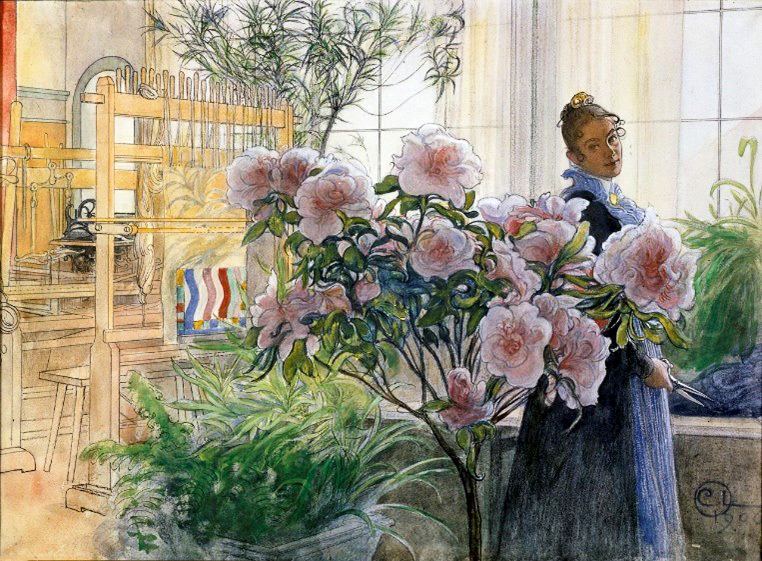
Did you know that some of the designs for the Swedish firm IKEA were inspired by the art of Karin Larsson. She gave up her career as a professional artist to be a wife, mother and homemaker. She rejected the dark, gloomy style of the time to use bright colours and cheerful abstract patterns to decorate the family home. Her tapestries had such a modern design that they are still popular today. This 1906 painting by her husband Carl shows Karin by her weaving loom